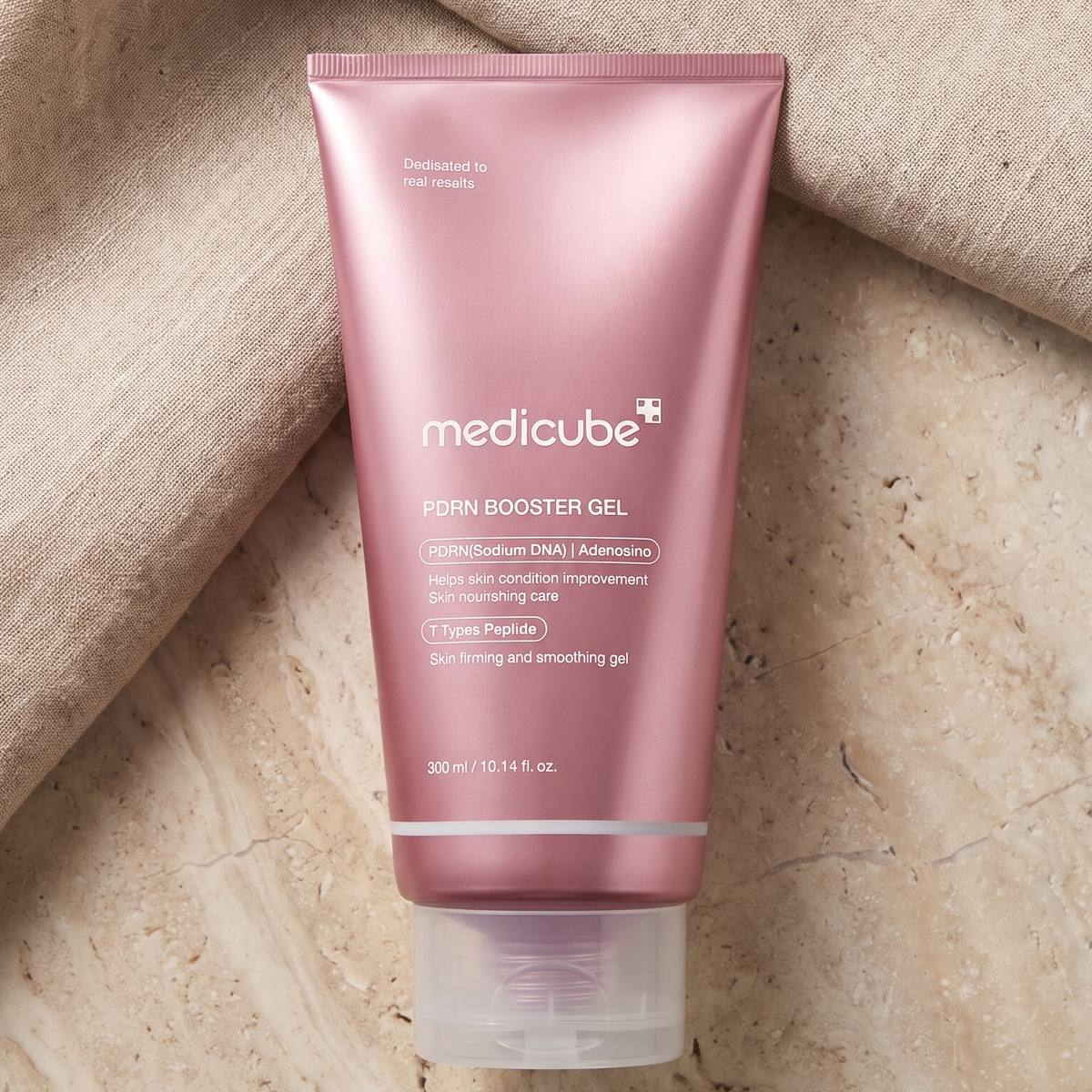

PDRN Skincare Explained: Is Salmon DNA Worth the Hype?
Download PDFThere are skincare trends built on genuinely clever formulation, and then there are trends built on a great origin story. PDRN, the “salmon DNA” ingredient taking over Korean skincare and your feed, sits somewhere in between.
PDRN is short for polydeoxyribonucleotide. In simple words: purified fragments of DNA, sourced from salmon sperm. In clinical medicine it has been studied for years to help wounds and burns recover, and that’s where its glowing reputation comes from. A face cream, however, is a very different story.
If you’re curious about PDRN but don’t want to pay for the marketing, this is the science-first guide to what it can and can’t do for your skin.
1. The Origin Story: Where the Salmon DNA Comes From
The exotic origin is the first thing every PDRN product wants you to notice.
- What it is: PDRN is a mix of DNA fragments purified from salmon trout or chum salmon sperm. The purification process removes the proteins and peptides that could trigger reactions.
- Why the hype: As a medical treatment, PDRN has been researched for tissue repair, from slow-healing wounds such as diabetic foot ulcers to burns. Skincare marketing borrows that track record.
- The catch: Your skin is a barrier, and keeping foreign material out, DNA included, is literally its job. So don’t get dazzled by the exotic origin. If you’re curious, try it as a fun extra, just not as a proven miracle for healthy skin.
2. Lab vs. Real Skin: What the Evidence Says
Petri dish: impressive. Your face: not so fast. Why can an ingredient that shines in a lab fall flat in a cream? Because cells in a dish have no barrier. Your face does.
- The size problem: To do any deep work, a big DNA molecule would have to get through your skin’s outer layer intact. As a general rule, ingredients pass through healthy skin most easily when they are very small, under about 500 daltons, and DNA fragments are many times larger.
- The human evidence: So far, the evidence for creams is thin. We found one human study, published in 2026: a different formula (an eye cream with 0.1% of a specific PDRN, about a hundred times more than some popular gels list), tested for one month. Interesting, but early.
- Spot filler science: If a jar costs more just because of one trendy ingredient, you’re paying for the marketing.
3. Glass Skin Masks and Eye Creams: What Actually Works
The buzzword sells it. The supporting cast does the work. When an eye cream or a Korean mask gives you instant glass skin, look past the front of the box.
- In an eye cream: Look for caffeine. It temporarily tightens tiny blood vessels, so puffiness looks calmer for a while. Niacinamide helps calm and brighten.
- In hydrogel and collagen masks: That instant plump comes from hyaluronic acid, glycerin and hydrolyzed collagen, flooding the surface of your skin with water. The glow is real; it’s just temporary.
- The rule: Read the full formula. Value solid hydrators and antioxidants, not one buzzword on the front.
4. K-Beauty: Real Science or Brilliant Marketing?
Honestly? A bit of both. And the science part is real.
- Texture technology: Korean labs are pioneers in making rich, nourishing formulas feel as light as water. That’s not magic. That’s formulation.
- Layered hydration: They build hydration in light layers, and many brands formulate without unnecessary irritants or fragrance. Trends come and go every few years; that engineering stays.
Conclusion: The Golden Rule
So, live and let live. If your skin loves a trend and it makes your routine fun, enjoy it guilt-free.
But secure your non-negotiables first: a gentle cleanser, a ceramide moisturizer and sunscreen every single day. Then, play.
Sources
Squadrito F. et al. (2017). Pharmacological Activity and Clinical Use of PDRN. Frontiers in Pharmacology. doi:10.3389/fphar.2017.00224
Ye R. et al. (2026). Topical medium-length PDRN enhances dermal extracellular matrix repair in photodamaged skin. PLOS One. doi:10.1371/journal.pone.0350905
Bos J.D. & Meinardi M.M. (2000). The 500 Dalton rule for the skin penetration of chemical compounds and drugs. Experimental Dermatology. doi:10.1034/j.1600-0625.2000.009003165.x
Herman A. & Herman A.P. (2013). Caffeine’s Mechanisms of Action and Its Cosmetic Use. Skin Pharmacology and Physiology. doi:10.1159/000343174
Gehring W. (2004). Nicotinic acid/niacinamide and the skin. Journal of Cosmetic Dermatology. doi:10.1111/j.1473-2130.2004.00115.x
Purnamawati S. et al. (2017). The Role of Moisturizers in Addressing Various Kinds of Dermatitis: A Review. Clinical Medicine & Research. doi:10.3121/cmr.2017.1363
Watch the video: PDRN Skincare Explained on YouTube